Why a concept beats a portfolio
Most advice on finding web design clients is about where to look: local directories, Google Maps, referrals, LinkedIn. That part is easy. The hard part is that every business owner already gets emails saying their website could be better. A portfolio asks them to imagine. A redesign of their own site, with their name, their photographs and their words, doesn't.
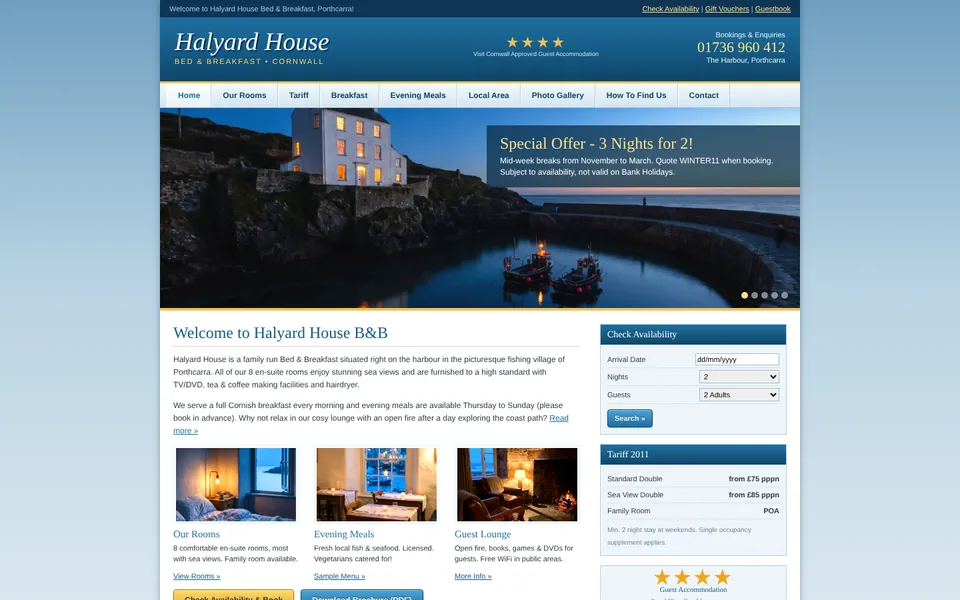 Their site today
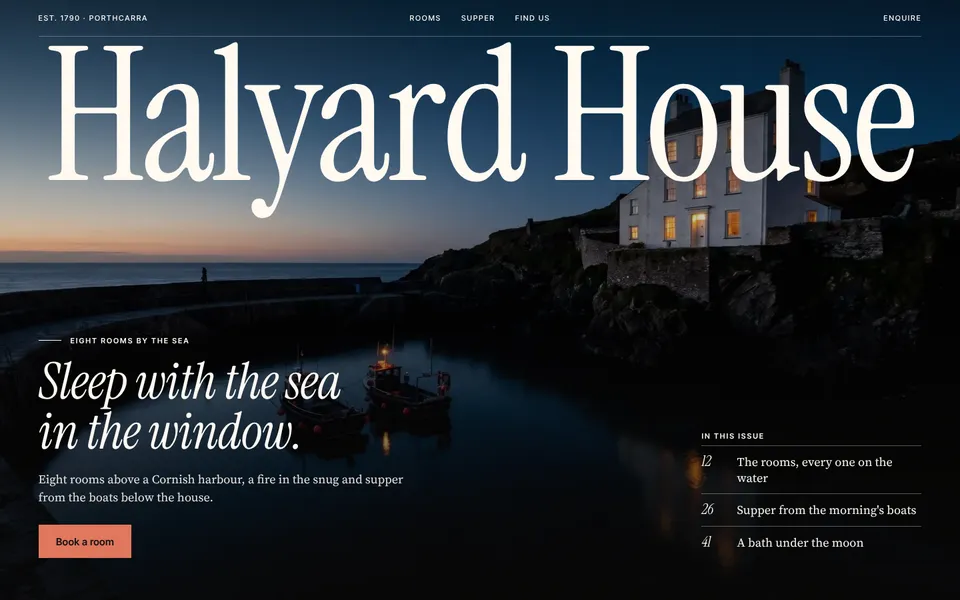 The concept you pitch
The pitch loop
- Pick prospects whose site is holding them backA café with great reviews and a site from 2014. A guest house whose booking page breaks on a phone. You're looking for a visible gap between the business and its website.
- Read their siteKeep what's true: the offer, the tone, the photographs worth keeping, the colours they're known by.
- Make a conceptTheir homepage, redesigned. Not a template with their name dropped in: their words, their pictures, a look chosen for them.
- Send a short, specific noteOne real observation, the before and after, a link. For example:
Subject: Halyard House, redesigned

Hi Mara, I stay in Mousehole most summers and noticed your booking
page is hard to use on a phone. I sketched what your homepage could
look like, using your own photos and words: [link]
If it's useful, I'd be glad to make it real. If not, no reply needed.
- Follow up on what they looked atSomeone who opened the concept twice and scrolled to the rooms is a different conversation from someone who never opened it.
- Turn interest into approvalBuild the full site, send a review link where they click anywhere to comment, and let them approve it there. Then publish on their domain.
The same loop with Sonder
Sonder, the website MCP for designers, runs this loop from your agent. Give Claude, ChatGPT or Cursor a list of prospects' links and ask for pitches:
- Read and concept: each site read whole, filled into the look that fits, with a before and after of each and one contact sheet of them all. Batches of more than five are homepages unless you ask for full sites.
- The note: a draft email per pitch with the before and after under the line that mentions it. Sonder never sends mail itself; you send it from your own email.
- The follow-up: who opened each pitch, for how long, which sections they saw and whether they clicked to get in touch, counted without cookies.
- The approval: a review link with pinned comments and an approve button, no account needed; then publishing on their domain.
Selling websites to local businesses
Local businesses buy from people they trust, and they buy outcomes: more bookings, more calls, fewer “are you open?” messages. Lead with that, in their language. Keep the first price simple (a fixed fee for the site, a small monthly fee if you host and maintain it). Don't pitch features. Pitch the page they'd be proud to send a customer to, and show it.
What this won't do: no tool makes a business want a new site. Pick prospects with a real gap, write like a person, and expect most pitches to go unanswered. The aim is modest and worth a lot: one more client a month.
Questions
How do I find web design clients as a freelancer?
Start local and specific: businesses you already know, in a trade you understand, whose sites are visibly holding them back. Referrals from happy clients come next. Then pitch each one with a concept of their own site.
Is it okay to redesign someone's website without asking?
A concept for a pitch, sent privately to the owner, is common practice. Don't publish it as your work or present it as theirs, and take it down if they ask. Send it to the owner, not to the world.
What should a cold email for a website redesign say?
Three to five lines: one specific thing you noticed, the concept, a link, and an easy way to say no. No packages, no exclamation marks, no attachments.
How many pitches does it take to win a client?
It varies too much to give a number honestly. Expect most pitches to go unanswered; a well-chosen prospect with a visible gap is worth far more than ten random ones.
What does Sonder cost for pitching?
The trial is free and covers one client project from pitch to built site. Solo is $39 a month for up to 3 client projects a month; Studio $99 has no project limit. See pricing.